
'There are two pre-conditions for big reforms. One, a sense of crisis and second, fairly concentrated levers of power.' 'India is growing at 7.5 per cent or something close to that.' 'Our levers of power are decentralised, not just between the Centre and states. Power is dispersed and there is no sense of crisis.'
India's latest GDP numbers do not signal robust economic growth in near term.

CEOs expect to finish the ongoing March quarter with positive growth as the corporates get back to work in full strength.

'India has about 22,000 tonnes of private gold, held by individuals and temples.' 'Much of this is locked up in safes and vaults as a dead investment. If we can put the vast reserves of gold to use, it would boost the economy,' says V P Nandakumar, executive chairman, Manappuram Finance, India's first listed gold loan company.

We must work in the direction of an innovation and technology driven economy which could boost up creation of jobs and open advanced and newer avenues of employment within the country.
Growth in India will pick up from current levels, says LEO Puri, managing mirector, UTI Asset Management Company.

It's the beginning of a rate reduction cycle

The first step to keeping your job safe, experts tell Rediff.com's Divya Nair, is understanding why layoffs happen.

'Such big falls are quite frequent these days, so do not try to time this market.' 'Use big dips to accumulate quality stocks.'

He has also said that the overall mood of the Indian consumer remains subdued

With the Indian economy expected to emerge as the third largest by 2030, investors have earmarked significant capital to actively participate in the India growth story.

'Jin Jiang had invested in Louvre Hotels.' 'Louvre, a couple of months ago, took a majority in Sarovar hotels.' 'So they are coming in now.' 'Look at the Chinese -- two quarters ago they took 25 percent in Hilton.' And then HNA also took majority in Carlson (Radisson).'

The government is considering withdrawing legal cases against telecom companies, involving disputes of about Rs 40,000 crore, a source said on Tuesday. In line with this, the Department of Telecom has already filed an affidavit before the Supreme Court in a case against Anil Ambani-promoted Reliance Communications to take an informed decision whether to proceed with the present appeal or not, the source said. DoT has said the telecom sector is passing through a financial stress due to various circumstances and telecom services providers are making losses.

We are adapting to the situation by innovating new delivery modelss, launching brand campaigns that are impactful in the current context and closely monitoring changes in consumer buying behaviour, he said.
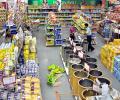
Moody's Investors Service has warned that India, along with the Philippines, Thailand, and Vietnam are highly vulnerable to volatile food and energy prices in the Asia-Pacific region as the Russia-Ukraine conflict continues to disrupt supplies and raise the cost of agricultural products, especially cereals and vegetable oils, as well as fertilizers and other agricultural inputs. This is so because these countries have a higher weighting of energy and food prices in their consumer price index (CPI) baskets, Moody's said in its report released on Tuesday. The weighting of energy and food in overall Indian CPI stands at over 55 per cent.

The American influential IT and telecom industry sought intervention of the Obama Administration against what they alleged are "discriminatory" Indian policies, which they claimed has resulted in several hundred millions of dollars of losses in the last quarter.
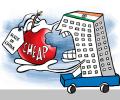
We import from China not because we love China, but because they sell us these things at cheap prices, points out Rathin Roy.

Ajit Balakrishnan offers a thinking man's guide to e-commerce controversies.
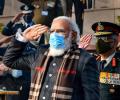
The coronavirus pandemic has not impacted India's long-term growth trajectory although it has delayed it and in this decade, the country will lead the global growth rates, Tata group chairman N Chandrasekaran said on Tuesday. Speaking at tech giant Microsoft's annual flagship event, Future Ready, he said it should be a national priority to enable access to healthcare and education using digital infrastructure for all in the country, considering how the acceleration of digital adoption during the pandemic has created a divide as many people, who do not have the means and access, have been left behind. "There are many things going for India. I think as the economy fully opens up post the pandemic, I believe that our growth will continue to get stronger.

'In the short term, we may see some disruptions due to Covid, but in the medium-to-long term, we should keep an eye on US inflation and 10-year bond yields.'
CEOs have complained that high interest rates have blocked their investment decisions. At the same time, customers are also deferring their purchases for new consumer durables, cars, and homes.
India has too many small companies and this is inefficient. It should instead have only a handful of very large players running its economy and these giants can then compete with the world, observes Aakar Patel.

Indian GDP will grow at 8.5 per cent in 2021-22, and the rate will accelerate further to 9.8 per cent in 2022-23, a foreign brokerage said on Tuesday. The GDP had contracted by 7.3 per cent in the pandemic-hit FY21, and is widely expected to grow at a faster pace due to the base effect in 2021-22. The Reserve Bank of India (RBI) expects a 9.5 per cent growth in 2021-22, and the same to slow down to 7.8 per cent as things normalise.

'It says, we are not just an overseas player -- we are Kia India and here for good'

Direct economic stimulus measures such as tax cuts for individuals and industry would have helped to prop up the Indian economy which was hit hard by the lockdowns across several states in India, say economists and corporate leaders. While the measures announced on Monday are focussed more on the supply side, these steps would take a lot of time to move the needle for the economy.

India's economy grew by 1.6 per cent in the fourth quarter of 2020-21, restricting the full-year contraction to 7.3 per cent, official data showed on Monday. The fourth quarter growth was better than the 0.5 per cent expansion in the previous October-December quarter of 2020-21. The gross domestic product (GDP) had expanded by 3 per cent in the corresponding January-March period of 2019-20, according to data released by the National Statistical Office (NSO).

First it was called content-led commerce. Then it came to be known as influencer-led commerce. And its latest iteration is creator economy. This evolution of the terminology for online personas impacting buying decisions -- through blogs, memes, bite-sized videos, and podcasts -- has happened over the past five to seven years.

The government must send out a clear signal that leadership positions at regulatory bodies are not a preserve of retired government officials, argues A K Bhattacharya.

On February 24, when Vladimir Putin announced a military operation on Ukraine, few would have thought that Indian government-owned GAIL India would feel the impact. The tensions over gas supplies were essentially a Europe-Russia problem, related to the sanctions western economies imposed on Moscow. But the EU depends on Russian imports for 40 per cent of its gas stocks, an over-dependence that Russia has underlined with Kremlin-owned Gazprom cutting its supplies through the Nord Stream 1 pipeline to 20 per cent, citing maintenance issues.
S&P Global Ratings on Tuesday raised India's growth projection for the current fiscal to -7.7 per cent from -9 per cent estimated earlier on rising demand and falling COVID infection rates. "Rising demand and falling infection rates have tempered our expectation of COVID's hit on the Indian economy. S&P Global Ratings has revised real GDP growth to negative 7.7 per cent for the year ending March 2021, from negative 9 per cent previously," S&P said in a statement. The US-based rating agency said its revision in growth forecast reflects a faster-than-expected recovery in the quarter through September. For the next fiscal, it projected India's growth to rebound to 10 per cent.

Optimism about a stable govt at the Centre, a demand revival and falling oil prices buoyed the markets.

'The markets have corrected almost 8-9 per cent from their highs, so one can accumulate quality stocks at reasonable prices.'

Bajaj Finance was the top gainer in the Sensex pack, soaring over 8 per cent, followed by Kotak Bank, IndusInd Bank, HDFC, PowerGrid, Axis Bank, ICICI Bank and L&T. On the other hand, Maruti, ITC, NTPC and Nestle India were among the laggards.

Experts say while the increasing demand for a ban on Chinese goods might make for good optics, the reality is that India is still heavily dependent on that country in a wide range of industries like electronics, mobile devices, auto, pharma, telecom equipment, and fertilisers.
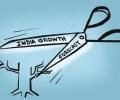
Global forecasting firm Oxford Economics on Monday revised downwards its India GDP growth forecast for 2021 to 10.2 per cent from 11.8 per cent previously, citing the country's escalating health burden, faltering vaccination rate and lack of a convincing government strategy to contain the pandemic. Oxford Economics also said that notwithstanding the likelihood of further mobility restrictions, it expects India's targeted lockdown approach, less stringent restrictions, and resilient consumer and business behaviour to mitigate the economic impact of the second wave.

Asia's falling stocks have triggered an exodus of funds from the region.
Members of the Monetary Policy Committee (MPC) felt that though the Indian economy was resilient in the third wave, it, however, lost some momentum and with inflation likely to soften, there is room to continue with the accommodative stance and support revival, the minutes of the MPC meeting released on Thursday revealed. The six-member MPC voted to keep the policy rate unchanged and continued with the accommodative stance at its meeting on February 10. However, external member Jayanth Verma voted against the stance because he felt a switch to neutral was long overdue and the current stance has become counterproductive and deflects focus away from addressing recessionary trends that date back to at least 2019.

HDFC and HUL are the latest entrants in the club

'The selling in India may emerge as soon as the RBI reverses its interest rate stance.'

The Modi government's array of economic policy has been impressive.
